HEALTHCARE
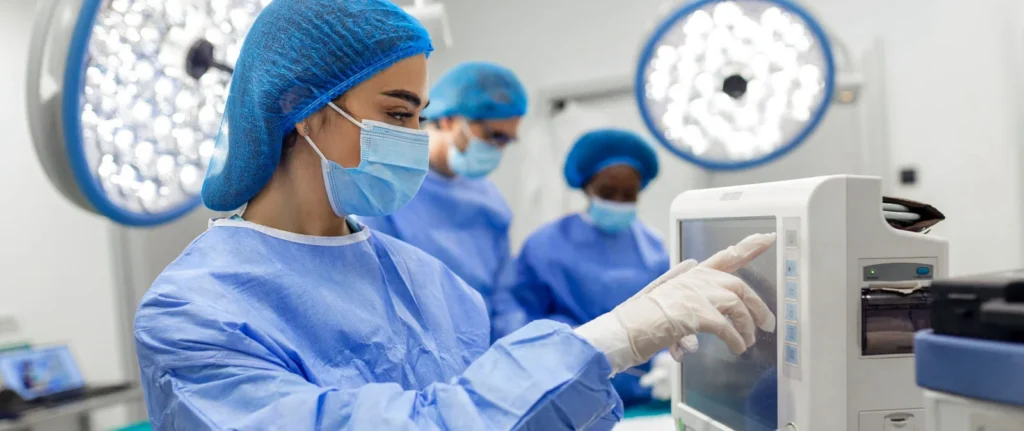
At a hospital
The start
1. When you are sick you go to the doctor [notranslate](“dokter” or “huisarts”)[/notranslate].
2. If you have problems with your teeth, you go to the dentist (“tandarts).
3. You can also get help at home if you can no longer do certain things yourself (“thuiszorg”).
4. For a special treatment you have to go to the hospital. Only the doctor can make it possible that you go to the hospital (“ziekenhuis”).
5. We call the doctor in the hospital: specialist
6. If you are going to live in the Netherlands, you have to look for a doctor yourself.
You make an appointment and the doctor determines whether he will be your doctor.
7. You make an appointment with the doctor through his assistant (usually a woman=”assistente”)
8. The doctor can prescribe medicines (“medicijnen”).
9. Then you go to the pharmacy with a letter from the doctor.
We call that letter the recipe (“recept”)
10. The doctor can also prescribe physiotherapy (“fysiotherapie”)


First appointment with doctor
In the Netherlands, we call the doctor “huisarts”.
If you want to make an appointment with a general practitioner (GP= “huisarts”) ) for the first time in the Netherlands, you can follow these steps: Register with a GP practice: To make an appointment with a GP, you need to first register with a GP practice. You can find a GP in your area and sign up with their practice. Call or make an appointment online: Once you’re registered, you can make an appointment with the GP. This can usually be done over the phone or online via the GP practice’s website. State the reason for your visit: When making an appointment, state the reason for your visit. This will help the GP to suggest the appropriate treatment or examination. Visit the GP practice: On the day of the appointment, go to the GP practice and check in at the reception desk. You will then be taken to the waiting room and the GP will call you in at the agreed time. Discuss medical history: At the first appointment, the GP will review your medical history with you to get a better understanding of your health. It is helpful to have your medication records and details of any previous medical treatment available.Searching for a General Practitioner (GP)
In the Netherlands, we say “een huisarts zoeken”.
A GP decides if you can become their patient. Sometimes they say on the phone that there’s no space. Then you have to call another GP.
Sometimes it can be hard to find a GP. Many GPs have too many patients.
Here are some tips:
First, look close to your home.
Call many GP’s and ask if they have space.
Ask people you know if they know a good GP.
There’s a website for GP’s. You can look there too.
If you really can’t find one, ask for help at the municipality. They can help you.

Finding a doctor

More about making an appointment
In the Netherlands, “making an appointment” is called “een afspraak maken”.
To make an appointment, you must always call the assistant first and provide the following information: • Your name • Date of birth • Reason to visit the doctor • Name of the healthcare provider (e.g. FBTO , Zilveren kruis ) Appointments with the doctor take place at a fixed time (for example in the morning) and you must arrive on time. If you are unable to come, you must call at least 24 hours in advance to reschedule. Otherwise, you will still receive a bill that you have to pay. If you do not speak the Dutch language well, you can bring someone who does speak Dutch well or call the interpreting centre for an interpreter on the telephone.How to get medicine
In Dutch: “medicijnen”
1. See a Doctor: If you feel sick or have a health problem, you go to a doctor. They examine you and decide if you need medicine.
2. Doctor’s Prescription: If the doctor thinks medicine will help, they write a prescription. It’s like a special note with details about the medicine you need. Medicine like aspirin you can obtain at shops like DG, Kruitvat and Trekpleister.
3. Go to the Pharmacy: Take the prescription to a pharmacy. There are many pharmacies in the Netherlands, and you can choose any one you like.
4. Get the Medicine: Give the prescription to the pharmacist at the pharmacy. They will give you the medicine and explain how to take it correctly.
5. Paying for Medicine: You might have to pay for part of the medicine’s cost. This depends on your health insurance. The pharmacist will let you know how much you need to pay.
6. Repeating Prescriptions: If you need more of the same medicine later, you can ask your doctor for a repeat prescription. This saves you from visiting the doctor again for the same medicine.
If you have any questions about the medicine or how to take it, you can ask the pharmacist. They are there to help you and can give you advice.
Remember, it’s important to follow the doctor’s instructions and take the medicine as prescribed.

Medicine